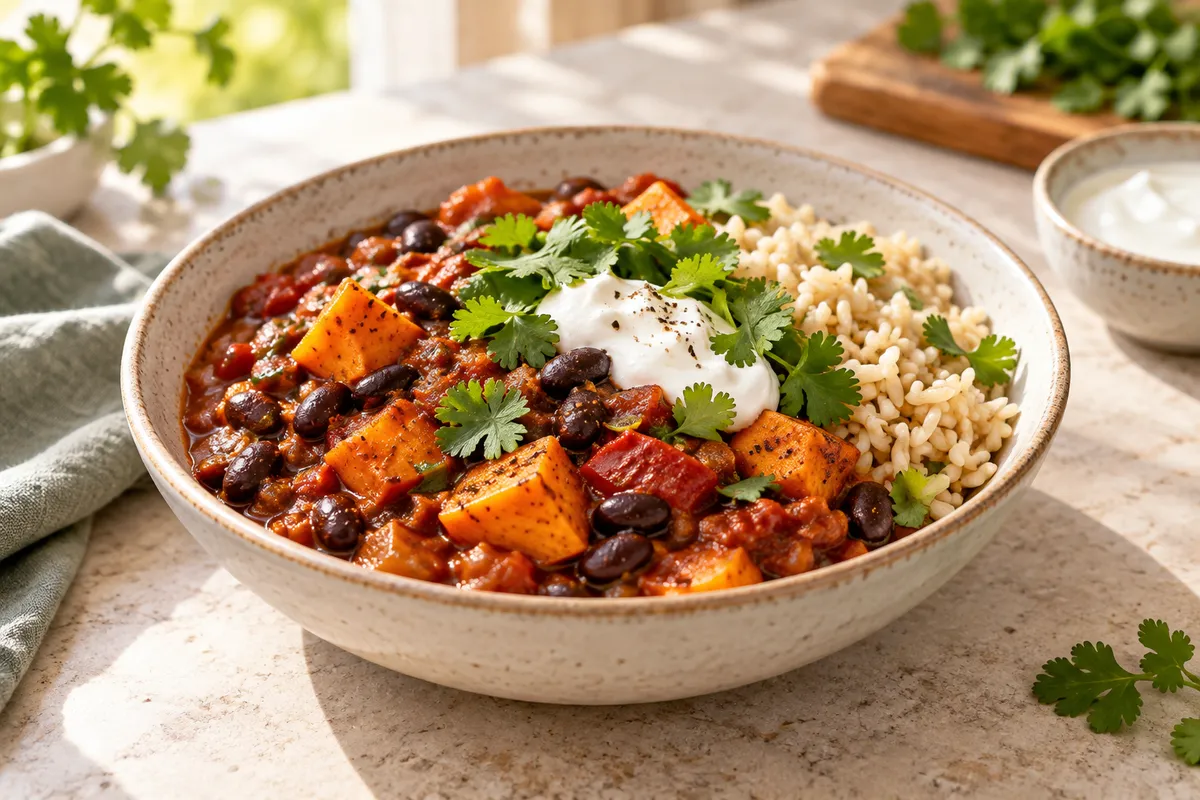
Beginning a vegetarian diet is easier when you start with food you already recognise. You do not need to replace your entire cupboard or learn a new cuisine overnight. The most useful first change is to replace meat or fish with something that does a similar job in the meal: providing substance, flavour and a clear protein source. A tomato pasta dish with lentils is a more practical starting point than a plate of salad chosen only because it contains no meat.
Decide what vegetarian means for you
Check whether you will continue to eat eggs and dairy. This affects your options at breakfast, in sandwiches and when planning nutrients. Vegetarian and vegan diets overlap but are not identical. If you are eating out, tell the restaurant what you avoid rather than relying on a label that might be used loosely. Ask about stocks, sauces and garnishes if these matter to you. A clear definition reduces avoidable confusion without requiring arguments about how other people eat.
Replace the centre of the meal
Try lentils in a bolognese-style sauce, beans in a chilli or tofu in a stir-fry. An omelette with potatoes and vegetables is another straightforward option if you eat eggs. Cheese can add flavour, but relying on it for every dinner limits variety. Keep a starchy food in the meal, especially if you are active or find vegetable-only dishes unsatisfying. Use herbs, spices and texture to make the meal appealing rather than treating vegetarian eating as a list of exclusions.
A practical example
For a first chilli, cook onion and pepper, add tinned tomatoes and drained beans, and season to taste. Serve with rice and a spoon of plain yoghurt or a suitable alternative. Make the flavour familiar enough that the dish feels like dinner rather than a compromise. If you dislike kidney beans, try black beans or lentils instead.
Try this in your own kitchen
Write three dinners you currently enjoy. Beside each, name one realistic vegetarian protein and one vegetable you can prepare quickly. Shop for only the first recipe, cook it and then decide whether it deserves a place in your regular rotation. This approach keeps the experiment affordable and avoids accumulating unfamiliar ingredients.
Before making your next shopping list, check these points:
- Have I included a substantial protein food?
- Is there enough food for my appetite and activity?
- Do I have a meal I can make on a busy evening?
Keeping the wider picture in view
Vegetarian eating is a pattern across the week, not a test passed by one meal. Appetite, activity, health and the foods available at home all influence what a useful meal looks like. A small bowl of vegetables alone may leave you hungry, whereas adding a substantial protein food and a starchy staple turns it into dinner. Equally, eating vegetarian does not require buying expensive specialist products. Familiar supermarket staples often work well. If you have unexplained tiredness, digestive problems, unintended weight loss or an existing medical condition, ask for individual advice rather than assuming a more restrictive menu will solve it. These practical examples are educational suggestions for adults, not a tailored diet plan or a replacement for care.
Your next step
Choose one familiar dinner and write down the meat-free protein that will replace its usual meat or fish. Keep the rest of the meal recognisable, including a carbohydrate you enjoy and vegetables that suit the dish. Cook it once before planning a whole new week. Note whether it was satisfying, affordable and straightforward. A repeatable meal is more useful than a complicated recipe you make only once. Move on to nutrient planning when that first meal feels comfortable.
Sources and further reading
Keep exploring
- Vegetarian protein, iron and B12: a useful planning checklist
- An easy vegetarian meal plan for a flexible week
- A vegetarian shopping list that makes busy evenings easier
- Vegetarian diet mistakes: avoid unnecessary restrictions
- Vegetarian meal prep: three adaptable recipe ideas
Keep exploring the practical questions.
Explore the guides