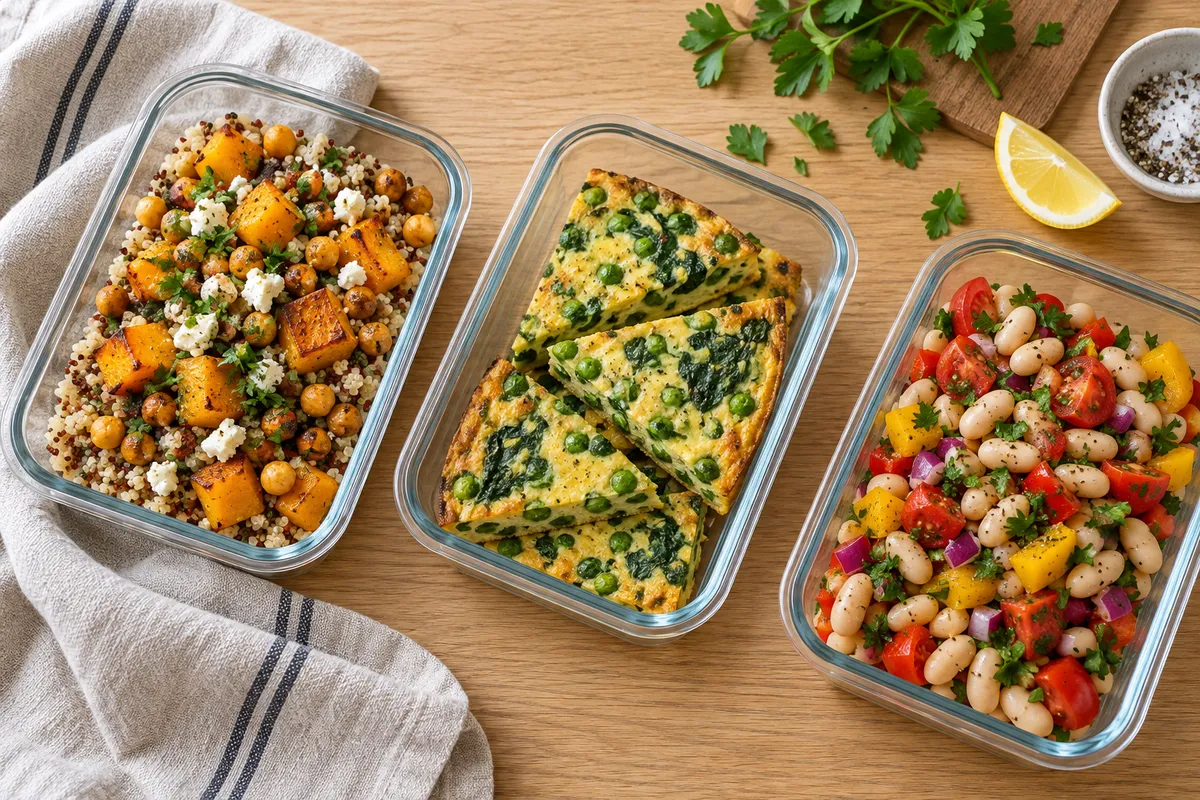
A useful vegetarian meal plan is a short set of decisions you can live with. It should fit your working hours, cooking skills and fridge space, rather than looking impressive on paper. Start with dinners because they often drive shopping, then choose breakfasts and lunches that use the same staples. Leave room for a changed schedule. A rigid plan that falls apart after one late evening is less helpful than three reliable dinners and a couple of quick alternatives.
Build the week around three bases
Use a tomato and lentil sauce, a tray of roast vegetables and a bean salad as starting points. The sauce can work with pasta or a baked potato; vegetables can join a chickpea bowl or an egg dish; the bean salad can become lunch with bread. Sharing ingredients does not mean eating an identical meal every day. Change the seasoning, temperature and accompaniment to keep meals interesting. Plan quantities deliberately so that leftovers are available because you intended them, not because everyone disliked dinner.
A three-day starting menu
Try oats with yoghurt or a suitable fortified alternative, hummus and vegetable sandwiches for lunch, and lentil pasta for dinner on the first day. The next day could include eggs or tofu on toast, leftover pasta sauce on a potato and a chickpea tray bake. On the third day, have your usual suitable breakfast, a bean-based soup and a vegetable omelette or tofu stir-fry. These are examples, not a calorie prescription. Add food or snacks according to your needs.
A practical example
A pack of peppers can appear in a chilli, a sandwich and a tray bake. Tinned chickpeas can join lunch one day and dinner the next. Keeping some frozen vegetables available means that the whole plan does not depend on fresh produce lasting until Friday. Use safe storage instructions for leftovers and cooked ingredients.
Try this in your own kitchen
Put the two busiest evenings in your diary first. Give them the quickest meals and reserve a more involved recipe for a day when you have time. Write down the ingredients shared across the plan. If one food appears only in a complicated recipe, decide whether it is worth buying this week or whether a simpler substitution would work.
Before making your next shopping list, check these points:
- Have I planned for the busiest day?
- Do ingredients have more than one use?
- Can I change one meal without disrupting the whole week?
Keeping the wider picture in view
Vegetarian eating is a pattern across the week, not a test passed by one meal. Appetite, activity, health and the foods available at home all influence what a useful meal looks like. A small bowl of vegetables alone may leave you hungry, whereas adding a substantial protein food and a starchy staple turns it into dinner. Equally, eating vegetarian does not require buying expensive specialist products. Familiar supermarket staples often work well. If you have unexplained tiredness, digestive problems, unintended weight loss or an existing medical condition, ask for individual advice rather than assuming a more restrictive menu will solve it. These practical examples are educational suggestions for adults, not a tailored diet plan or a replacement for care.
Your next step
Test two dinners from your plan before committing to seven. Notice preparation time, the amount left over and how hungry you feel afterwards. Adjust quantities to your appetite rather than following someone else’s portions rigidly. Keep one flexible meal in reserve for a changed schedule. A meal plan should make the week easier; if it creates extra shopping trips or a fridge full of unused produce, simplify it.
Sources and further reading
Keep exploring
- Vegetarian diet for beginners: build your first balanced meals
- Vegetarian protein, iron and B12: a useful planning checklist
- A vegetarian shopping list that makes busy evenings easier
- Vegetarian diet mistakes: avoid unnecessary restrictions
- Vegetarian meal prep: three adaptable recipe ideas
Keep exploring the practical questions.
Explore the guides