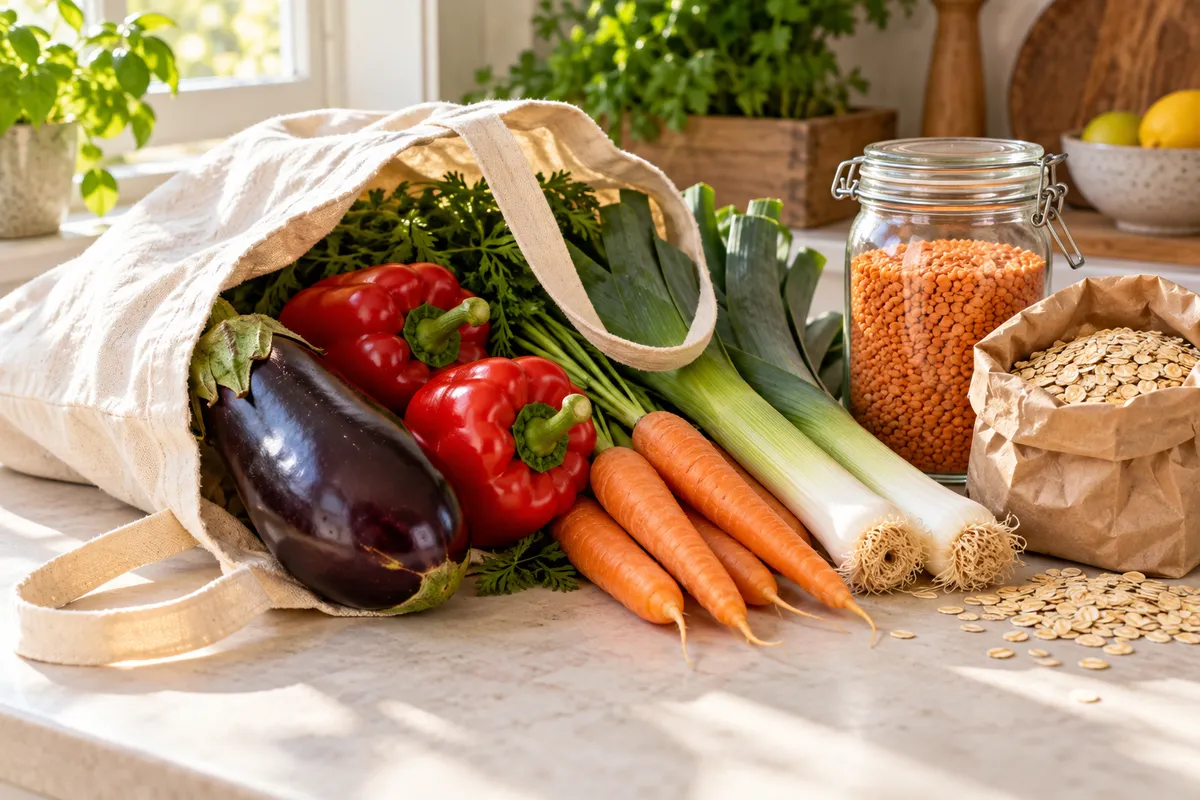
A vegetarian shopping list works best when it is organised around meals rather than a collection of foods described as healthy. A bag of lentils is useful only if you know when you will cook it. Tinned pulses, frozen vegetables and familiar starchy staples are often good starting points because they offer flexibility. Add fresh foods according to the meals you actually intend to make, and check what is already in the cupboard before spending money.
Create a small set of dependable staples
Choose a couple of pulses you enjoy, one or two grains, tinned tomatoes and flavourings you already use. Keep wholemeal bread or potatoes available if they suit your meals. Eggs, plain yoghurt, tofu or fortified alternatives can complete the list depending on your diet. There is no compulsory vegetarian superfood. A modest list that gets used is better than an expensive collection of seeds, powders and unfamiliar substitutes. Frozen produce can be particularly useful when shopping less often.
Read beyond the vegetarian label
Compare protein, salt, saturated fat and ingredients when choosing ready-made substitutes. The front of the pack tells you what a product avoids; the back helps explain what it contributes. Some alternatives make a useful quick dinner, while others are mainly a treat or a vegetable accompaniment. Check fortified plant drinks for the nutrients you are relying on, and remember that brands can differ. A convenient product can belong in a varied diet without becoming the foundation of every meal.
A practical example
A simple basket might contain lentils, chickpeas, oats, wholemeal bread, tomatoes, frozen peas, carrots, eggs or tofu, and a suitable milk or alternative. Add seasoning and fruit you enjoy. The exact list will change with your preferences, allergies and budget. Make substitutions that preserve the job of the ingredient in the meal.
Try this in your own kitchen
Choose one cupboard shelf for quick dinners and put five dependable ingredients together. Write three combinations you can make from them. For example, beans plus tomatoes plus rice can become dinner; chickpeas plus bread plus salad can become lunch. Take a photograph of the shelf before your next shop so that you do not buy duplicates.
Before making your next shopping list, check these points:
- What meal will each ingredient become?
- Have I checked fortification where it matters?
- Will I use the fresh foods before they spoil?
Keeping the wider picture in view
Vegetarian eating is a pattern across the week, not a test passed by one meal. Appetite, activity, health and the foods available at home all influence what a useful meal looks like. A small bowl of vegetables alone may leave you hungry, whereas adding a substantial protein food and a starchy staple turns it into dinner. Equally, eating vegetarian does not require buying expensive specialist products. Familiar supermarket staples often work well. If you have unexplained tiredness, digestive problems, unintended weight loss or an existing medical condition, ask for individual advice rather than assuming a more restrictive menu will solve it. These practical examples are educational suggestions for adults, not a tailored diet plan or a replacement for care.
Your next step
Choose five staples you already know how to use and give each a place in a meal. Check your cupboards before shopping and write quantities beside the ingredients you need. Compare unit prices when useful, but buy the pack you can realistically store and use. Put a quick meal at the front of your cupboard so that a busy evening does not depend on remembering a recipe. Review what went unused before the next shop.
Sources and further reading
Keep exploring
- Vegetarian diet for beginners: build your first balanced meals
- Vegetarian protein, iron and B12: a useful planning checklist
- An easy vegetarian meal plan for a flexible week
- Vegetarian diet mistakes: avoid unnecessary restrictions
- Vegetarian meal prep: three adaptable recipe ideas
Keep exploring the practical questions.
Explore the guides