Meal preparation is most useful when it removes a difficult step from the day you are busiest. You do not have to cook an entire week on Sunday. Preparing one sauce, washing a few vegetables or keeping a cooked component ready can be enough. The following ideas are designed to be adaptable rather than exact prescriptions. Check allergens and package instructions, and use safe storage practices whenever you prepare food in advance.
A lentil sauce and a chickpea tray bake
For a lentil sauce, soften onion, add tinned tomatoes, lentils and your preferred herbs, and cook until the lentils are tender. Add liquid as needed and follow the lentil packet. Serve with pasta, a potato or bread. For a tray bake, combine drained chickpeas with chopped vegetables and a little oil, then roast until the vegetables are cooked. Add a yoghurt and lemon dressing at the table if suitable. Change the seasoning to make either base feel different next time.
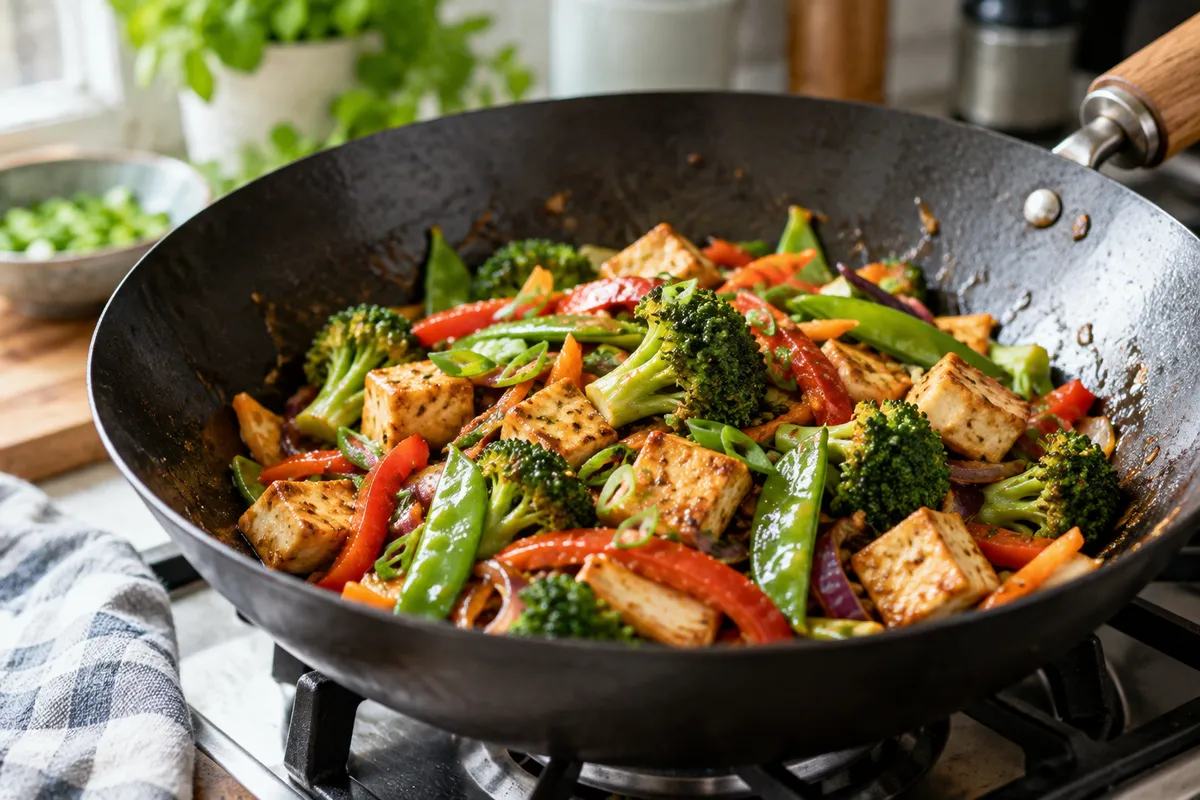
An egg or tofu pan meal
Cook vegetables in a pan and add beaten eggs for an omelette, or crumble tofu with seasoning for a scramble. Serve with toast or potatoes rather than expecting a small vegetable dish to keep everyone satisfied. If using eggs, cook them to a safe standard appropriate to the people eating them. For tofu, check the pack and any soy allergy needs. The principle is the same: start with a protein, add vegetables and choose an accompaniment that fits appetite.
A practical example
Tomato lentils might be pasta sauce on Monday and a baked-potato topping on Tuesday. Roast chickpeas and vegetables could be dinner with rice and then a lunch filling with bread. A freshly cooked egg or tofu dish works well when you have very little preparation time but still want a substantial meal.
Try this in your own kitchen
Choose one base to make in a quantity you can safely store and realistically eat. Label the container with its contents and preparation date. Plan the second meal before putting it away, so the leftover has a clear use. If your schedule changes, use freezer-safe storage where appropriate rather than leaving food in the fridge indefinitely.
Before making your next shopping list, check these points:
- Have I checked allergens and packet instructions?
- Do leftovers have a planned use?
- Can I store and reheat the food safely?
Keeping the wider picture in view
Vegetarian eating is a pattern across the week, not a test passed by one meal. Appetite, activity, health and the foods available at home all influence what a useful meal looks like. A small bowl of vegetables alone may leave you hungry, whereas adding a substantial protein food and a starchy staple turns it into dinner. Equally, eating vegetarian does not require buying expensive specialist products. Familiar supermarket staples often work well. If you have unexplained tiredness, digestive problems, unintended weight loss or an existing medical condition, ask for individual advice rather than assuming a more restrictive menu will solve it. These practical examples are educational suggestions for adults, not a tailored diet plan or a replacement for care.
Your next step
Pick one recipe that shares ingredients with another meal you already cook. Make the sauce or pulse base first, then decide whether to serve it with rice, bread or potatoes. Store leftovers safely and label anything frozen. Small improvements in preparation can make vegetarian eating much easier without changing every part of your routine. Repeat the dish with a different vegetable next time to build variety gradually.
Sources and further reading
Keep exploring
- Vegetarian diet for beginners: build your first balanced meals
- Vegetarian protein, iron and B12: a useful planning checklist
- An easy vegetarian meal plan for a flexible week
- A vegetarian shopping list that makes busy evenings easier
- Vegetarian diet mistakes: avoid unnecessary restrictions
Keep exploring the practical questions.
Explore the guides